Princes cannot like their own children, those that should succeed unto them'. The Duke of Windsor, when Prince of Wales, rarely saw his parents, noting philosophically that `for better or worse, Royalty is excluded from the more settled forms of domesticit

While affection was certainly not lacking in my upbringing, the mere circumstances of my father's position interposed an impalpable barrier that inhibited the closer continuing intimacy of conventional family life' He recalled how his early years at Sandringham `were spent almost entirely under the care of nurses', one of whom would pinch him and twist his arm before he paid his daily visit to his parents at teatime, and the `sobbing and bawling this treatment invariably evoked understandably puzzled, worried, and finally annoyed them' and led to his being peremptorily dismissed from their presence. He regretted never being alone with his parents, who constantly had either an equerry or lady-in-waiting in attendance, and also that `except when we were taken to parties for the children of our parents' friends, or the members of the Household brought their sons and daughters to one of the Royal estates, we almost never saw our contemporaries [and] ... were thus deprived of the company of other children'. His lot was at least preferable to that of the son of the Maharajah of Rewah, who explained to the Viceroy of India, Lord Hardinge, that he kept the boy in a palace miles away, `because all sons wished to poison their fathers and that his son was thus removed from temptation'.
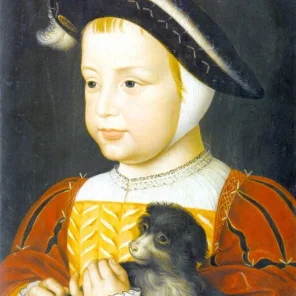
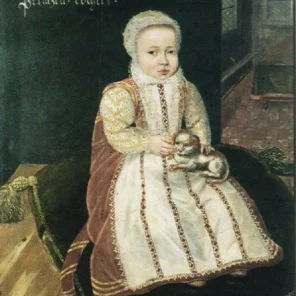
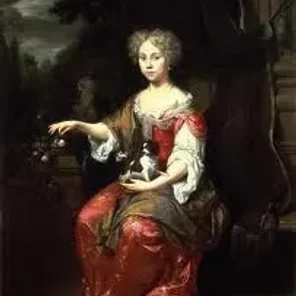
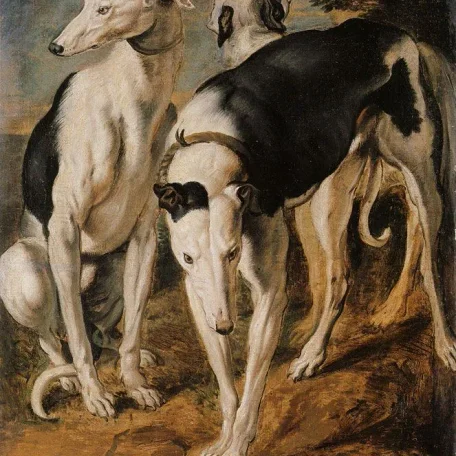
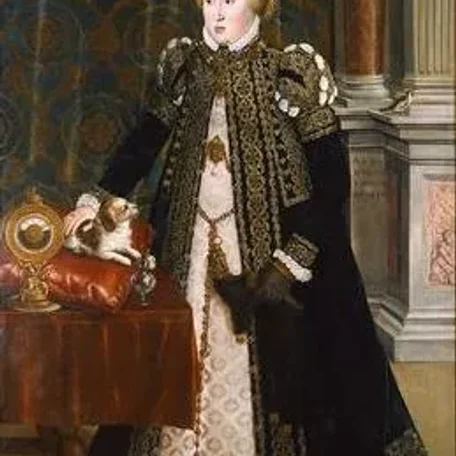
Princesses fared no better and, like their brothers, found an emotional outlet in keeping pets. James I's daughter, Elizabeth of Bohemia, had so many during her lonely childhood at Coombe Abbey in the care of Lord and Lady Harington that Sir Dudley Carleton, ambassador at The Hague, wrote: `Of little dogs and monkeys, she hath no great want, having sixteen or seventeen in her own train.' At one time she had no fewer than twenty dogs and later became notorious for favouring her dogs above her children. Her daughter, Sophia, Electress of Hanover, remembered her preferring `the sight of her monkeys and dogs to that of her children' who, in consequence, were raised in Leyden while Elizabeth remained in The Hague. Frederick the Great's sister, Wilhelmina, alleged `punches and kicks were my daily bread' — administered by her father. Unlike her brother, she was at least allowed pets, a practice dearly frowned upon at the militaristic Prussian court where Crown Prince Frederick (1831-8, reigned 1888) was later flogged for giving a servant twenty groschen for bringing him his dog from Potsdam (some twenty miles). When her brother was imprisoned at Kustrin, Wilhelmina wrote him clandestine letters, the discovery of which by the King would have had serious and unpleasant repercussions. She recalled how in 1726 she was nearly caught in the act when her father made an unexpected appearance and attempted to open the cabinet behind which, on hearing him approach, she had just had time to thrust her secret letters, though not the inkwell which she held behind her back. He was distracted by her mother:
She had a very beautiful little Bolognese dog, and I had one too; both these animals were in the bedroom. `Resolve our differences,' she said to the King, `my daughter says her dog is more beautiful than mine, and I maintain the opposite.' He started laughing, and asked me if I were very attached to mine? `With all my heart,' I answered, for `he is very lively and has a very good nature.' My reply pleased him, he embraced me several times, making me overturn my ink-well. The black liquid spilt all over my dress, and began to pour all over the floor. I dared not move, for fear the King notice. The situation was saved by his leaving ...